
Camera category
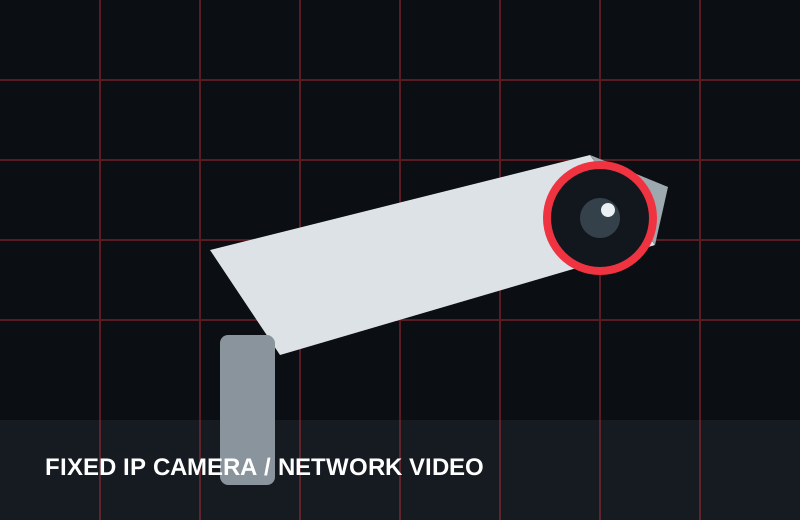
Fixed IP Cameras
Directional cameras suit defined viewing lines such as entrances, yards, approaches and perimeters. Lens angle, low-light performance, weather protection and mounting height all affect the usable image.
Cameras, network video recorders, surveillance storage and supporting equipment for dependable IP CCTV systems.
Discuss your requirements
Blackhawk supplies CCTV and NVR equipment for new installations, system expansion and replacement projects. The right combination depends on what each camera needs to capture and how footage will be recorded and reviewed.
Directional cameras suit defined viewing lines such as entrances, yards, approaches and perimeters. Lens angle, low-light performance, weather protection and mounting height all affect the usable image.
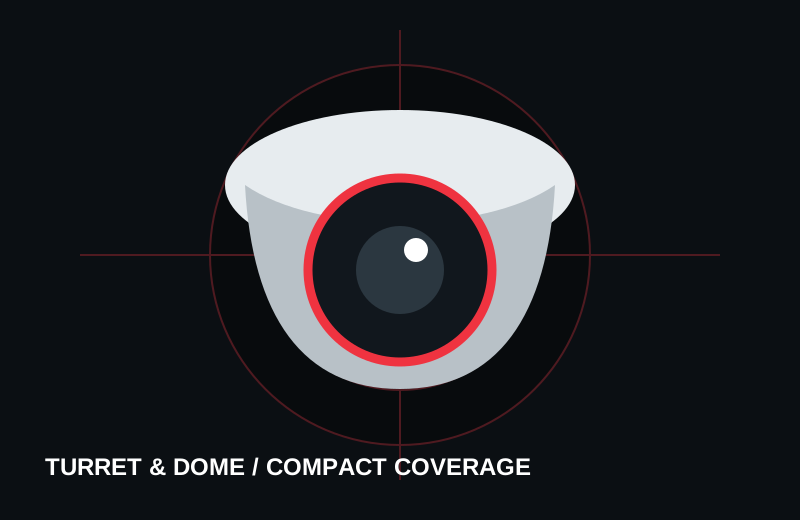
Compact formats provide a neat installation for entrances, internal areas, soffits and elevations. Selection should consider vandal resistance, IR reflection, weather rating and the required viewing angle.
A highly visible form factor that works well for directional external coverage. Bullet cameras can be useful where the camera itself should form part of the visible deterrent.
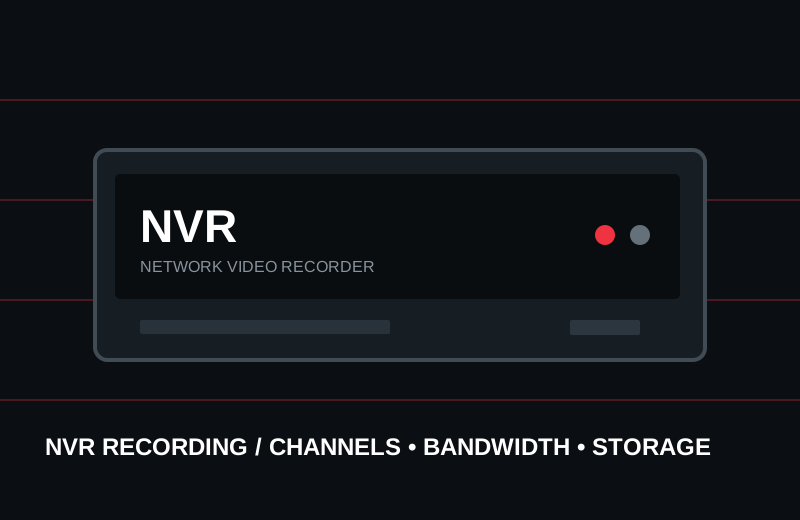
Network video recorders manage compatible IP cameras, record footage and provide playback and export. Channel capacity, incoming bandwidth, PoE capability and drive bays are key selection points.
Continuous video recording places different demands on drives than ordinary desktop use. Capacity is calculated from camera quantity, bitrate, recording schedule and required retention.
PoE switches, cabling and network capacity support both camera power and video traffic. Correct power budgets and cable routes are essential for stable operation.
The NVR should have enough camera channels for the installation, enough incoming bandwidth for the selected video streams and enough storage to meet the required retention period.
Retention varies with image resolution, compression, frame rate, bitrate, recording schedule and the number of cameras. A system designed for continuous recording will usually require more storage than one using event-based recording.
| Component | What to consider | Purpose |
|---|---|---|
| Camera | Lens, resolution, low light, IR, environment | Capture useful detail in the required scene |
| NVR | Channels, bandwidth, PoE, outputs, compatibility | Record and manage the full camera system |
| Storage | Drive capacity, recording mode, retention | Keep footage available for the required period |
| Network | PoE budget, cable distance, switching | Provide reliable power and video transport |
Allowing spare recorder channels, suitable network capacity and sensible storage expansion can make future camera additions easier.